Start here
Ash Meadows
visitor center & hours.
“Start with the movie.
It has fish in it.”
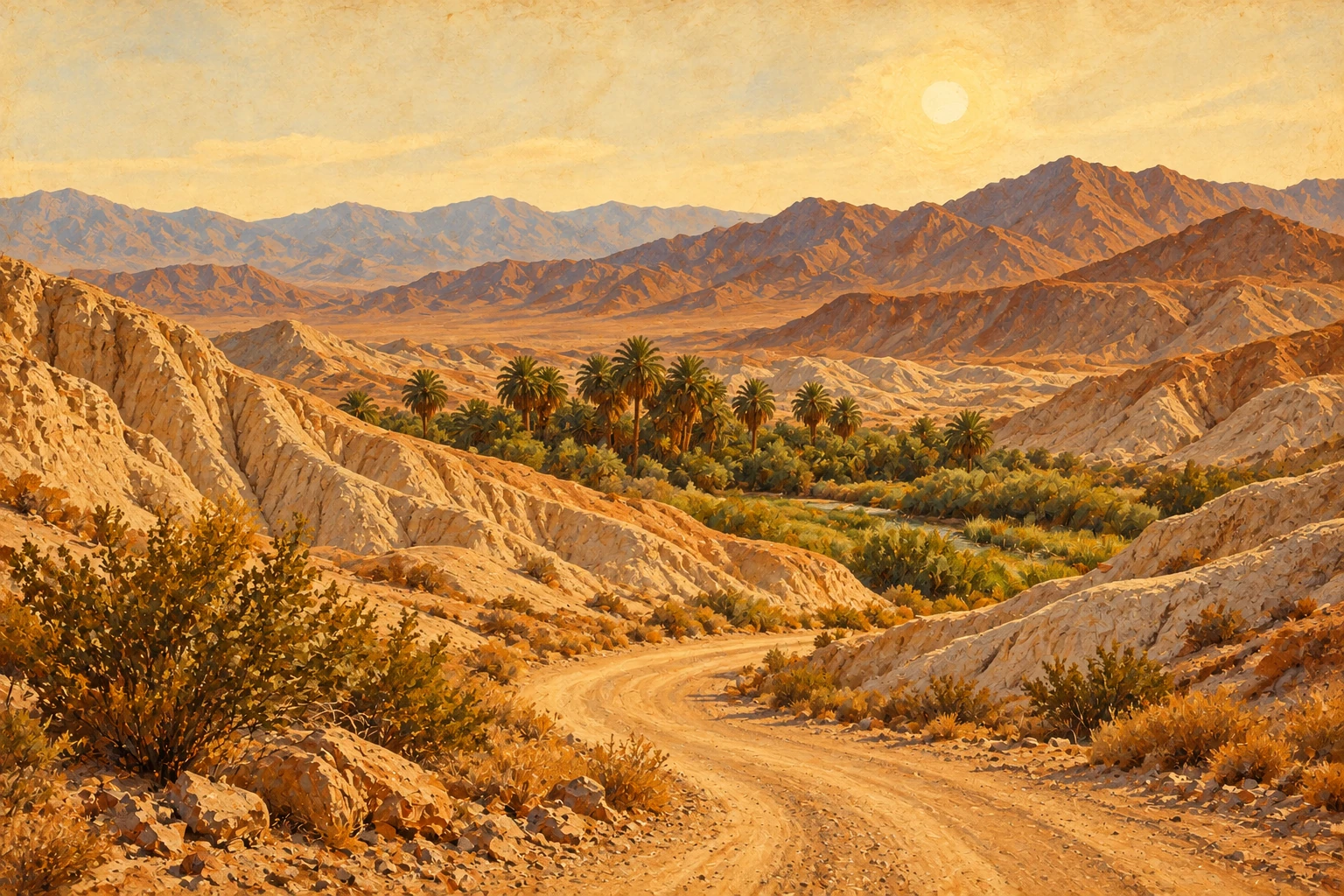
Ash Meadows National Wildlife Refuge is the largest remaining oasis in the Mojave Desert and has the highest concentration of endemic species in the United States. The U.S. Fish & Wildlife Service runs it.
The visitor center has interactive exhibits, regular showings of the Ash Meadows movie, a bookstore and a picnic area. The Crystal Spring boardwalk starts out back, and restrooms are out front. It is at 8757 Spring Meadows Road South, Amargosa Valley; (775) 372-5435.
Hours
- Visitor center: every day, 9 AM to 4 PM.
- Trails and boardwalks: every day, sunrise to sunset.
- Day use only: no overnight stays.
Walk the water
Things to do at Ash Meadows:
boardwalks & Crystal Spring.
Three wheelchair-accessible boardwalks lead to the best of the refuge. Dogs on a leash are welcome on them; bicycles are not.
Crystal Spring
Right behind the visitor center. The boardwalk runs about 0.9 miles round trip to a Caribbean-blue spring pool about 15 feet deep. It pours out 2,800 gallons a minute and stays at 87°F. There are benches, scopes and signs along the way.
Point of Rocks: closed until November 15, 2026
The Point of Rocks road and boardwalk are closed from September 15 to November 15, 2026, while the boardwalk is rebuilt. When it reopens: about 0.5 miles round trip through mesquite to Kings Pool and its pupfish, past grinding holes left by ancient people, up to a hilltop with viewing scopes. Desert bighorn sometimes show up in the Devils Hole Hills nearby. The trailhead has a covered picnic area.
Longstreet Spring and Cabin
About 0.2 miles round trip to the stone cabin Jack Longstreet built in 1896, set into a mound above an underground spring. The spring pool is sometimes called the boiling spring, because fine white sand churns up from below. It is 3.4 miles from the visitor center.
Other things to do
Drive the auto tour on the refuge roads, bird the spring and fall migrations, take photographs, picnic at the visitor center, or join a ranger-led program. Hunting is allowed in designated areas only.
Ash Meadows: boardwalks and distances Ash Meadows: trails Ash Meadows: Point of Rocks closureThe deep end
Devils Hole
and its pupfish.
“The world’s rarest fish.
Shorter than your thumb.”
Devils Hole is a water-filled limestone cavern inside the refuge boundary. It has been a detached unit of Death Valley, and managed by it, since 1952. It is 3.6 miles east of the visitor center, open sunrise to sunset. The viewing platform sits high above the water, so you look down from a distance.
- Depth: divers have mapped it to 500 feet. Nobody has found the bottom.
- Temperature: about 93°F, year-round.
- Earthquakes: big quakes on the far side of the world can raise waves up to 6 feet in the hole within minutes.
- The fence: in 1965, three divers broke through it. Two were never found, despite 44 rescue divers searching for three days.
Devils Hole pupfish
The smallest and rarest pupfish in the world lives only here. The whole population feeds and breeds on one shallow rock shelf of about 215 square feet, grazing algae and tiny invertebrates. Adults average 0.9 inch. Historically, the count swings between about 100 and 200 fish in winter and 300 to 500 in late summer.
When pumping for a cattle ranch began dropping the water, the case went to the Supreme Court. Its 1976 decision limited the pumping.
Ash Meadows: Devils Hole U.S. Fish & Wildlife Service: Devils Hole pupfish Death Valley’s managers on Devils HoleIce Age survivors
Ash Meadows
pupfish.
The refuge’s fish have lived in these springs since the Pleistocene. Four are endangered:
- Devils Hole pupfish
- Ash Meadows Amargosa pupfish
- Warm Springs pupfish
- Ash Meadows speckled dace
The Ash Meadows killifish is already extinct. Kings Pool on the Point of Rocks boardwalk is the classic place to watch pupfish; in spring the males turn an even brighter blue to attract a mate. Fishing and swimming are prohibited on the refuge.
Ash Meadows: species Ash Meadows: why visitBehind the scenes
Ash Meadows Fish
Conservation Facility.
“A backup copy
of the world’s rarest fish.”
The Ash Meadows Fish Conservation Facility, finished in 2013 on the refuge, keeps a captive population of Devils Hole pupfish. Its centerpiece is a tank of about 100,000 gallons built as a replica of the Devils Hole habitat. Each month the staff and their park service partners collect eggs, invertebrates and algae from Devils Hole. The eggs hatch in aquaria, and the young go into the big tank as young adults.
The facility is not open to the public.
Ash Meadows Fish Conservation FacilityFind your way
Ash Meadows National Wildlife Refuge
map & roads.
The official refuge map is an interactive boundary map on fws.gov. Not everything inside the boundary is open: undeveloped areas are closed to all travel, even on foot. Stay on the boardwalks, roads signed open to foot traffic, and the parking and picnic areas.
Distances from the visitor center
- Crystal Spring: behind the building.
- Longstreet Spring and Cabin: 3.4 miles.
- Devils Hole: 3.6 miles.
- Point of Rocks: 4.1 miles.
Roads
Every road in the refuge is dirt, maintained for regular vehicles and motorcycles. Most speed limits are 25 mph. Rain makes them slick and muddy, and some sections may close.
Ash Meadows National Wildlife Refuge map Ash Meadows: rules and policies Ash Meadows: road conditionsFor riders
Are motorcycles allowed
at Ash Meadows?
“Plated and mirrored.
Or parked.”
Yes, if they are street legal. Only registered, insured passenger vehicles are allowed on the refuge, and motorcycles must be registered, insured and have rear-view mirrors. A plated dual sport rides in on the same dirt roads as everyone else.
Off-highway vehicles are prohibited: side-by-sides, quads, dune buggies and anything designed mainly for off-highway use. Stay on the designated roads and keep to the posted speeds. Bicycles, e-bikes included, are allowed on the public roads, but not off road or on the boardwalks.
Want to ride sand? Big Dune is a few miles away and open to off-highway vehicles.
Ash Meadows: vehicle rulesHouse rules
Refuge rules
& camping.
- Camping: overnight camping is prohibited. The refuge is day use only.
- Dogs: on a six-foot leash at all times. Clean up after them.
- Drones: prohibited.
- Swimming, boating and fishing: prohibited.
- Fire: no fires or fireworks, and no smoking outside vehicles or designated areas.
- Artifacts and fossils: take pictures only.
- Wildlife: do not feed or approach it. Rattlesnakes, sidewinders included, are out in the warm months.
Where to stay nearby
The refuge points visitors to two hotels close by, both with restaurants: the Longstreet Inn in Amargosa Valley, which also has RV sites and fuel, and the Amargosa Hotel at Death Valley Junction. There is a campground at Death Valley Junction.
Ash Meadows: rules and policies Ash Meadows: local amenitiesHow it was saved
A little
Ash Meadows history.
“Saved by a fish
under an inch long.”
For thousands of years, Southern Paiute (Nuwuvi) and Timbisha Shoshone (Newe) people lived by these springs, growing corn, beans, squash and sunflowers and harvesting mesquite pods. The name comes from the ash trees described in expedition notes from 1893.
Jack Longstreet, whose real identity is still a mystery, built his stone cabin here in 1896. Shotgun Kitty, a mail-order bride from Philadelphia, always carried a shotgun.
By the 1960s the oasis was in trouble. Peat mining at Carson Slough destroyed about 2,000 acres of wetland. A cattle operation bulldozed dunes, put streams in concrete ditches and pumped groundwater until Devils Hole began to drop. After the 1976 Supreme Court ruling, a developer planned a resort community instead. The Nature Conservancy brokered a sale, and the refuge was established on June 18, 1984. In 1986 it became the fourth Ramsar wetland of international importance in the United States.
Ash Meadows: about the refuge
When to go
Ash Meadows
weather.
- Fall: one of the two best seasons. The ash trees turn gold and orange, and migrating birds stop in. Watch for coyotes, bobcats and bighorn.
- Spring: the other one. Blooms peak and lizards come out on the boardwalks.
- Summer: days reach 110°F and can top 120°F. The hottest time of day is 4 to 5 PM, so go early. Late-summer monsoon rain happens.
- Winter: mostly mild, with the odd freeze or snow. On cold mornings the warm springs steam.
Find the water
Getting to
Ash Meadows.
The refuge is about 90 miles northwest of Las Vegas and 30 miles northwest of Pahrump. The recommended route for cars and RVs is the West Entrance off Nevada 373.
- From Pahrump: north on Nevada 160 to Bell Vista Road, about 22 miles on Bell Vista, then Spring Meadows Road, which is dirt, to the South Entrance. Follow the signs to the visitor center.
- From Las Vegas: US 95 north to Nevada 373 at Lathrop Wells, south toward Death Valley Junction, then State Line and Bell Vista Road to Spring Meadows Road.
- High-clearance routes: Crystal Road to the Devils Hole Entrance, or Ash Meadows Road from Bell Vista.
The refuge puts Furnace Creek 44 miles away, Beatty 48, Shoshone 41 and Tecopa 55.
Fuel
The nearest gas is at the Longstreet on Nevada 373, about 6 miles from the visitor center. There is also gas at Lathrop Wells, at US 95.
Round out the day in Amargosa Valley, at the Amargosa Opera House, in the Tecopa hot springs or in Death Valley.
Ash Meadows: directions, distances and fuelRide the Pahrump side
Ride the desert
with us.
Our all-day supported ride starts just outside Pahrump, about 30 miles from the refuge. $399 with a KTM or Husqvarna rental and fuel, or $299 on your own street-legal small dual sport. Chase truck, Chef Ruth’s homemade lunch, drinks and snacks, and a beer at the finish. Saturdays, September until it gets too hot. Bike details are on our Pahrump motorcycle rental page.
See the ride ↗